
TABLE OF CONTENTS
After spending years consulting directly with assisted living owners, executive directors, and regional operators, I’ve learned one hard truth: most census problems aren’t about a lack of leads—they’re about what happens after the inquiry comes in. I remember working with a 55-bed community in the Southeast back in 2023 that hovered around 76% occupancy for nearly two years. They had decent traffic from referrals and ads, but move-ins stayed flat. Once we implemented a structured census system focused on nurturing, follow-up automation, and tour-to-close optimization, they added 12 residents in the first four months—pushing occupancy to 89% and generating over $720,000 in additional annualized revenue. No massive new marketing budget required.

That’s the kind of real-world impact the right assisted living census solutions deliver. As of late 2025, industry data from NIC MAP shows assisted living occupancy has climbed steadily, reaching 87.2% in Q3 across primary markets (up 0.9 percentage points from Q2), with overall senior housing at 88.7% and independent living crossing 90% for the first time since 2019. Demand from aging Baby Boomers is at record levels, with occupied units nearing 630,000 in Q3—yet new supply remains constrained (under 1% annual inventory growth in many periods). For operators still below the benchmark, the opportunity to capture the AL census recovery and achieve occupancy stabilization is massive.
This post walks through proven approaches that focus on building a reliable census growth engine: better lead qualification, automated nurturing, CRM integration, follow-up sequences, tour excellence, and ongoing sales process refinement. If you’re an Executive Director, Owner/Operator, Regional Director, or Sales Director tired of inconsistent move-ins, these strategies can help you fill beds more predictably.
Ready to see where your current system might be leaking residents? Schedule a free census review meeting today—we’ll look at your numbers and highlight quick, high-impact fixes.
Why Census Decline Happen Even With Steady Inquiries
Industry benchmarks paint a clear picture: lead-to-tour conversion often sits between 20–35%, and tour-to-move-in rates average 25–40% without strong optimization. That means even a solid inquiry flow can leave 60–75% of potential residents slipping away.
The most common reasons I’ve seen across dozens of communities:
- Slow or inconsistent follow-up (manual processes lead to delays and forgotten prospects)
- Generic nurturing that doesn’t speak to operator pain points like revenue shortfalls or staffing strain
- Lack of visibility—no weekly reporting to catch trends early
- Tours that feel scripted instead of personalized
In 2025, with demand surging but labor challenges lingering, operators can’t afford these inefficiencies. The good news is that census improvement strategies centered on internal systems often deliver faster, more sustainable results than scaling lead generation alone.
One regional director I partnered with last year reduced lead drop-off by 38% after adding multi-channel automation—resulting in 9 extra move-ins over a single quarter. Small process tweaks, big financial impact.
If your occupancy feels stuck, let’s talk through your specific situation—book a no-pressure consultation here.
Core Components of an Effective Assisted Living Census System
A strong assisted living census system isn’t a single tool—it’s an integrated framework that guides prospects smoothly from first contact to residency.
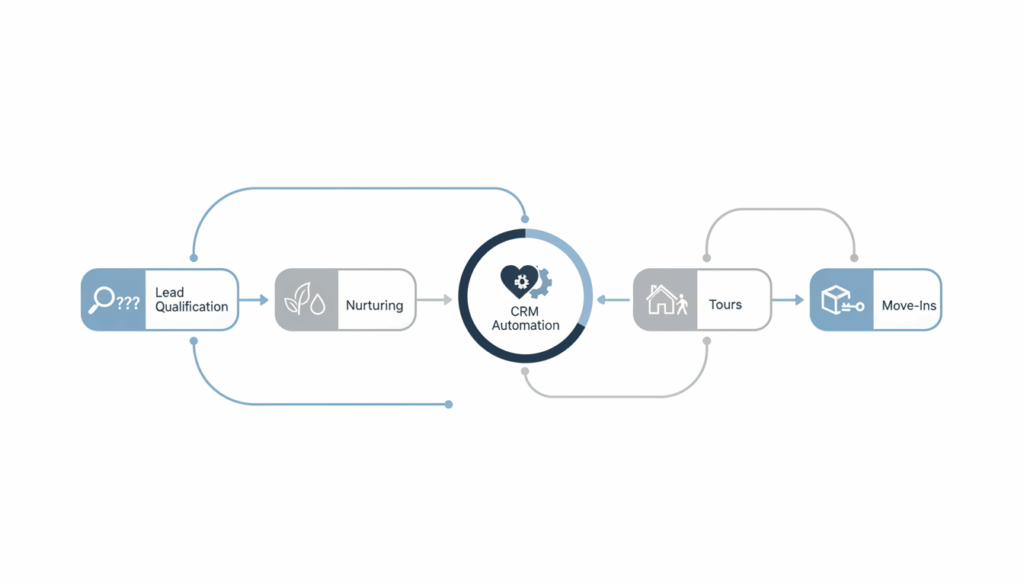
Here’s what top-performing operators prioritize:
- Intelligent Lead Qualification — Segment inquiries immediately (by facility size, urgency, role of decision-maker) to prioritize hot leads.
- Multi-Channel Nurturing — Automated sequences across email, SMS, and calls (7–12 touches over 3–4 weeks) that feel personal and educational.
- CRM & Workflow Automation — Seamless handoffs, alerts, and tracking to eliminate manual chaos.
- Tour & Close Optimization — Pre-qualified, customized experiences with immediate follow-up proposals.
- Weekly Reporting & Iteration — Data dashboards showing exactly where drop-offs occur and which tactics move the needle.
These elements work together to create predictable census growth. Operators using this approach often see 15–25% occupancy lifts within 4–8 months.
For a full breakdown of how we build these systems specifically for senior living operators, take a look at our complete range of services.
Practical Census Improvement Strategies That Work in 2025
Here are the tactics that consistently deliver results based on real operator campaigns:
- Automate Follow-Ups & Nurturing — Implement 7–10 touch sequences: instant SMS confirmation, value emails (“5 Hidden Occupancy Leaks”), personalized video messages, and SMS tour nudges. I’ve seen this cut no-shows by 30–40%.
- Enhance Tour Conversion — Pre-qualify visitors, tailor tours to specific needs (revenue-focused for Owners, workflow-focused for Sales Directors), and send customized proposals within hours. This alone can boost assisted living move-ins by 25–35%.
- Use Data to Fix Decline — Track weekly KPIs: inquiry sources, response times, tour booking rates, and ghosting points. Adjust fast—e.g., prioritize high-converting referrals.
- Streamline Internal Processes — Automate alerts for low-occupancy trends and CRM handoffs between sales and operations teams.
These census decline fixes align perfectly with current trends: strong Boomer demand, limited new supply, and a shift toward efficiency over volume.
Want to pilot one or two of these in your community? Secure your spot for a strategy call—we’ll customize them to your exact setup.
Benchmarks: What Good Looks Like in Late 2025
Use these industry-aligned targets to gauge your performance (drawn from NIC MAP and operator reports):
| Metric | Average Benchmark | Top Performer Target | Impact on Census |
| Lead to Tour Conversion | 20–35% | 40–50% | More tours from existing inquiries |
| Tour to Move-In Rate | 25–40% | 45–55% | Higher close rate |
| Overall Inquiry-to-Move-In | 10–18% | 22–30% | Sustainable bed fills |
| 6-Month Occupancy Lift | 5–12% | 15–25% | Revenue boost of $500K–$1M+ (50-bed) |
Real operators hitting the high end report stronger margins and less stress. If your numbers fall short, it’s usually fixable with better systems.
Building Long-Term Occupancy Stabilization
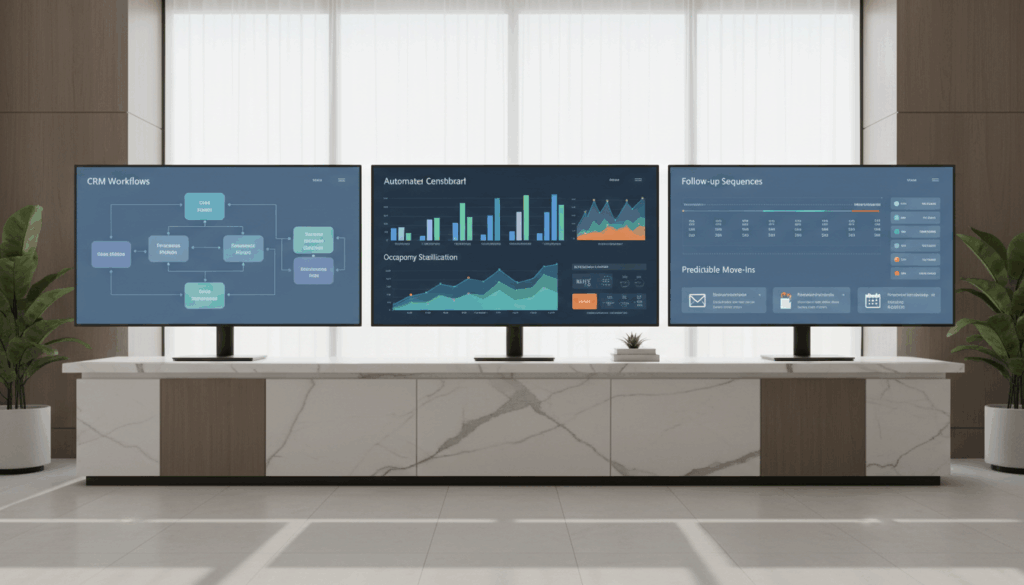
Sustainable occupancy stabilization comes from treating census as a system, not a campaign. At Alchemical Marketing, that’s our focus: custom census growth frameworks for assisted living and memory care operators that integrate lead nurturing, automation, CRM, follow-ups, and sales optimization.
In one recent case, a 48-bed facility stuck at 81% implemented our approach and reached 93% in five months—adding 11 residents and roughly $660,000 in annual revenue. The owner later said the biggest relief was finally having visibility and predictability.
If you’re ready to build something similar, book a free census growth consultation now.
Common Pitfalls to Avoid
From experience, here are the traps that slow progress:
- Relying too heavily on referrals without owning the full funnel
- Skipping post-tour nurturing
- Not reviewing data weekly
Start small: Pick one bottleneck (like follow-ups) and automate it this month. Measure, adjust, repeat.
Take the Next Step Toward a Stronger Census
The senior living landscape in late 2025 favors operators who optimize what they already have. With demand at record highs and new supply limited, the right assisted living census solutions can deliver meaningful move-ins and revenue gains.
If inconsistent occupancy is holding your community back, don’t wait. Schedule a complimentary strategy session today—we’ll review your current process and give you clear, actionable steps.
Here’s to hitting your census goals in 2026 and beyond.
Frequently Asked Questions
How quickly can assisted living operators expect census improvement with better systems?
Most see initial gains (5–10% occupancy lift) in 60–90 days from tightening follow-ups and automation. Full stabilization often takes 4–8 months as data informs ongoing tweaks. NIC trends show top performers achieving 15–25% lifts in under a year when focusing on internal optimization.
What’s the biggest reason the census stays flat despite steady inquiries?
Lead drop-off from inconsistent nurturing and slow responses. Many operators lose 60–70% of prospects before tours due to manual processes. Fixing this with automated multi-channel sequences is one of the fastest ways to recover census.
Do these census solutions work for small independent facilities or just chains?
They scale very well for independents. Smaller communities (20–60 beds) often see quicker percentage gains because changes are implemented faster. I’ve helped several single-site operators go from mid-70s to low-90s occupancy in 5–7 months.
What tools are typically needed for an effective assisted living census system?
Start with your existing CRM plus affordable automation (SMS/email tools like Twilio/Zapier). Add reporting dashboards for visibility. Fully managed frameworks can integrate everything seamlessly—ROI usually shows in months through added move-ins.
How much revenue can a 10–15% occupancy increase generate?
At average monthly rates of $5,500–$7,000 per resident, filling 6–10 more beds could add $400,000–$840,000 in annualized revenue for a mid-sized community. That’s often the difference between tight margins and strong profitability.