
TABLE OF CONTENTS
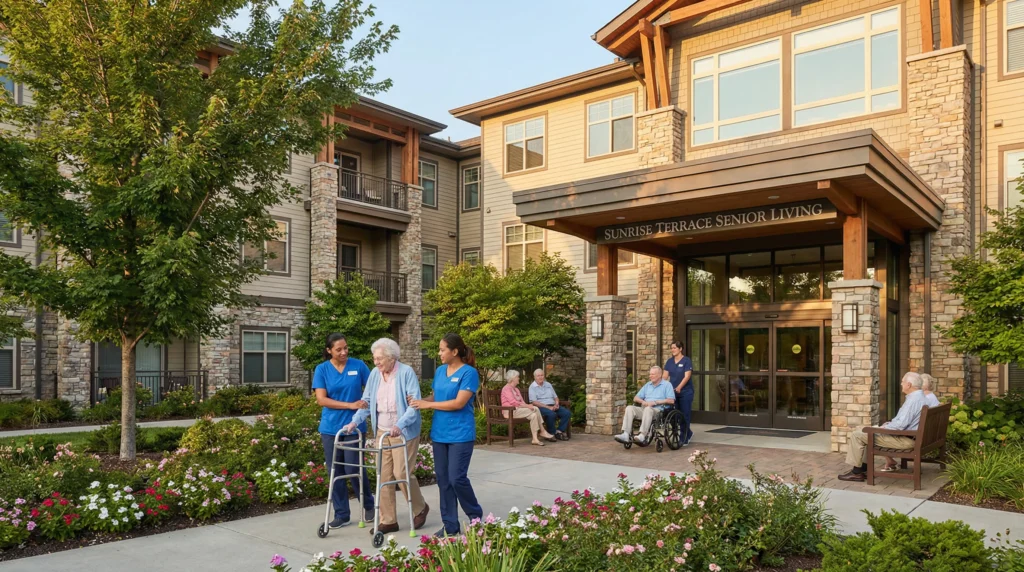
Increasing assisted living occupancy is not about generating more leads – it’s about converting the leads you already have more efficiently. I consulted for a 52-unit assisted living community in 2025 that was averaging 76% occupancy despite decent inquiry volume. The team was focused on ad spend but losing prospects at every stage. We implemented 8 targeted tactics, from faster response time to clinical tour optimization and pipeline reporting, without increasing marketing budget. Seven months later, occupancy stabilized at 90%, move-ins rose from 7–9 to 13–15 per quarter, and annualized revenue increased by approximately $1.1 million. The Executive Director later said the biggest surprise was how much of the problem was internal friction, not market conditions.
Assisted living fundamentals remain very strong. NIC MAP Vision Q4 2025 preliminary data shows overall senior housing occupancy stable at 88–89%, with assisted living communities typically running 1–3 points higher and continuing to add occupied units despite limited new supply growth (<1% annually in most primary markets). Operators who execute these 8 tactics systematically see the fastest and most sustainable assisted living occupancy growth.
This guide is written specifically for Executive Directors, Owners/Operators, Regional Directors, and Sales Directors who want practical, high-ROI ways to increase assisted living occupancy and fill beds more predictably.
If your assisted living occupancy is stuck below the benchmark or move-ins feel unpredictable, schedule a free occupancy tactics review call. We’ll audit your current process and show you the highest-impact fixes.
1. Slash Lead Response Time to Under 30 Minutes
The fastest single tactic to increase assisted living occupancy is speed of response.
Industry data shows:
- Response <30 minutes → tour booking probability 300–400% higher than 1–2 hours
- Response >4 hours → recovery rate usually <15%
Immediate implementation steps:
- Set up instant SMS + email auto-confirmation
- Route urgent inquiries directly to sales/clinical staff
- Use dynamic templates with name and basic need acknowledgment
Operators who fix this see 30–50% more tours within 60 days, often the biggest single lift in occupancy.
2. Shift to High-Quality Lead Sources
Volume of leads is a trap. Quality drives occupancy.
Top sources for assisted living occupancy growth:
- Professional referrals (hospitals, discharge planners), 35–50% conversion
- Targeted B2B search (“assisted living operator marketing,” “occupancy solutions”)
- Clinical education content for professionals (guides, webinars)
- Referral incentives for case managers
Operators who get 60%+ of leads from these sources often cut cost per move-in by 30–50%.
For lead quality tactics, see improving assisted living lead quality, not just volume.
3. Automate Multi-Channel Nurturing Sequences
Manual follow-up cannot scale in assisted living.
Recommended 60–90 day sequence:
- Minute 0–30, Instant SMS + email confirmation
- Hour 1, Value email: “5 Hidden Occupancy Leaks”
- Day 1, Personalized video message
- Day 3, Downloadable guide
- Day 7, SMS + calendar link
- Day 14, Testimonial from a similar operator
- Day 30–90, Bi-weekly value content
This automation reduces early drop-off by 40–60% and increases tour bookings significantly.
For automation examples, see assisted living marketing automation drives move-ins.
4. Optimize Tours for Conversion
Tours are the make-or-break moment.
High-conversion elements:
- Start with operator’s current occupancy challenges
- Show revenue & staffing benefits first
- Use anonymized case studies
- End with clear next steps and immediate follow-up commitment
Operators who standardize this see tour-to-move-in rates rise 15–25 points.
For tour optimization, see the assisted living tour conversion playbook.
5. Streamline Move-In Workflows
Delays after proposal kill momentum.
Key fixes:
- Digital packet & e-signatures
- Dedicated move-in coordinator
- Automated reminders for documentation
- Pre-approval financial screening
- Weekly status updates
This cuts move-in time by 20–45 days in most communities.
For admissions optimization, see optimizing the assisted living move-in process for higher conversions.
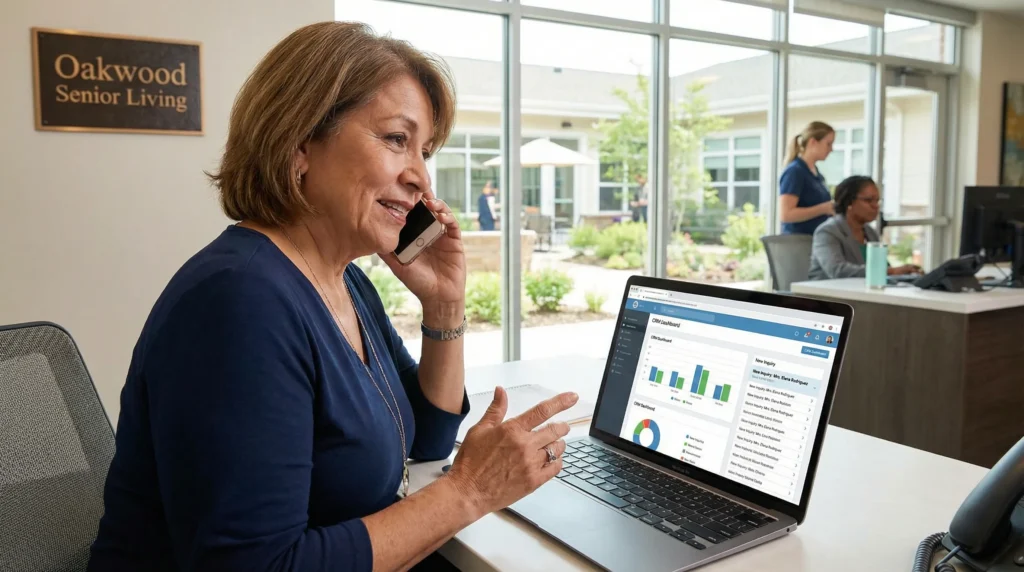
6. Implement Strong CRM Workflows & Pipeline Visibility
A strong CRM is the nervous system.
Must-have elements:
- Custom stages with automated tasks
- Lead scoring & tagging
- Weekly velocity reporting
- Dashboard showing drop-offs and bottlenecks
Operators with this visibility fix leaks fast and replicate winning tactics.
For CRM setup, see choosing the right CRM for assisted living census growth.

7. Build Weekly KPI & Reporting Discipline
You cannot improve what you cannot measure.
Essential weekly KPIs:
- Lead-to-tour conversion
- Tour-to-move-in rate
- Cost per move-in by source
- Move-ins vs target
- Pipeline coverage ratio
- Occupancy projection (90 days)
Weekly review meetings focus on red metrics and test one fix at a time.
For forecasting fundamentals, see how assisted living operators forecast census accurately.
8. Continuous Improvement & Portfolio Scaling
The strongest systems never stop evolving.
Ongoing practices:
- Monthly best-practice sharing
- Quarterly audits & rebalancing
- Annual clinical & operational training
- Testing one new tactic per quarter
This discipline turns good occupancy into consistently excellent occupancy.
For multi-site scaling, see marketing assisted living across multiple communities.
How Alchemical Marketing Builds These Census Growth Systems
We specialize in designing and implementing census growth systems tailored for assisted living and memory care operators. Our frameworks integrate all 8 tactics above, with special attention to memory care’s longer cycles and clinical needs.
In one recent engagement, a 15-community operator went from a portfolio average 80% to 89% occupancy in 12 months, adding over $9.5 million in annualized revenue. The corporate team gained full visibility while local sites retained enough flexibility to win in their markets.
Learn more about our tailored approach on the Alchemical Marketing homepage or explore our full range ofservices.
Ready to implement these 8 tactics and scale your occupancy? Secure your free census growth consultation.
Common Mistakes When Trying to Increase Assisted Living Occupancy
From real operator implementations:
- Chasing volume without fixing leaks amplifies waste
- Ignoring response time, loses most prospects
- No lead scoring, treats all leads equally
- Generic tours fail to address operator pain points
- Skipping weekly KPIs, problems compound
Prioritize ruthlessly: response → nurture → tours → visibility.
Your Next Step to Higher Assisted Living Occupancy
With senior living occupancy stable around 88–89% in early 2026 and demand still outpacing supply, operators who execute these 8 tactics systematically will achieve the most sustainable occupancy gains.
If your assisted living occupancy is below benchmark or move-ins feel unpredictable, schedule a complimentary occupancy tactics review today. We’ll map your current state and give you clear, prioritized next steps.
Here’s to more consistent move-ins, stronger occupancy, and healthier operations in 2026.
Frequently Asked Questions
What’s the fastest single tactic to increase assisted living occupancy?
Lead response time under 30 minutes. It can increase tour bookings 300%+ and is the foundation for everything else.
How long does it take to see a meaningful occupancy lift from these tactics?
Initial gains (5–10% lift) often appear in 60–90 days. Full stabilization and 15–25% gains are common within 6–12 months.
Should operators focus on consumer ads or B2B sources?
B2B sources (referrals, targeted search for operators) deliver higher-quality leads that convert faster and at lower cost.
How much revenue can these tactics add?
At a $6,500/month average rate, increasing occupancy from 80% to 90% in a 50-unit community adds 5 residents, ~$3.9 million annualized.
What’s the most common mistake when trying to increase occupancy?
Chasing more leads before fixing internal leaks (response time, nurturing, follow-up). Fix leaks first, then scale quality leads.