
TABLE OF CONTENTS
I’ve spent years helping memory care operators turn around underperforming communities, and one thing is always true: memory care occupancy solutions require a different approach than assisted living. The sales cycle is longer, families and referral sources need far more clinical reassurance, and trust is built slowly over multiple touches. I recall one 36-unit memory care facility I worked with in late 2024 that was stuck at 69% occupancy for over 18 months. The team had leads — mostly from neurologists and hospitals — but conversions were painfully low.
We focused on three priorities: faster clinical follow-up, personalized educational nurturing, and structured tour experiences. Within seven months, they added 10 residents, reached 88% occupancy, and stabilized revenue. The Executive Director later said the biggest shift was realizing most of the problem was in the process, not a lack of demand.
The senior living market remains robust. NIC MAP Vision Q4 2025 preliminary indicators (full report expected early Q1 2026) show overall senior housing occupancy holding steady around 88–89%, with memory care facilities typically tracking slightly below assisted living but showing consistent quarter-over-quarter gains.
Demand for memory care continues to grow rapidly due to the aging Baby Boomer population and increasing dementia prevalence, while new memory care inventory growth remains constrained (under 1% annually in most primary markets). For operators, this creates a clear window for memory care census recovery — but only if you implement the right MC occupancy systems.
This guide is written specifically for Executive Directors, Owners/Operators, Regional Directors, and Sales Directors managing memory care communities. We’ll cover the proven memory care occupancy solutions that drive census improvement and demand stabilization in today’s market.
If your memory care occupancy is lagging or inconsistent, schedule a free occupancy strategy call — we’ll audit your current performance and highlight the top fixes.
Why Memory Care Occupancy Challenges Are Unique
Memory care sales are more complex than assisted living. Decision-makers (often adult children + medical professionals) require extensive education, emotional support, and clinical confidence. Industry benchmarks show:
- Lead-to-tour conversion: 15–30% (longer deliberation periods)
- Tour-to-move-in rate: 20–35% (high trust needed)
- Overall inquiry-to-move-in: 8–15% (patience is essential)
Common leaks I see across memory care operators:
- Slow or generic follow-up — families disengage quickly
- Tours focused on amenities instead of clinical safety and dementia expertise
- Weak referral networks — hospitals and neurologists send patients elsewhere
- No structured nurturing — leads go cold during a 60–120 day decision window
- Poor visibility into the pipeline — drop-offs go unnoticed
In 2026, with strong demand and limited new supply, operators who solve these internal challenges first see the fastest memory care census recovery.
The Highest-Impact Memory Care Occupancy Solutions
Here are the proven priorities operators should tackle for MC occupancy systems:
Ultra-Fast, Clinical Lead Response Time
- Responding within 30 minutes (automated SMS + email) can lift tour bookings 300%+.
- Action: Instant confirmation + personalized message from Clinical Director.
- Impact: Reduces early drop-off by 40–60%.
Educational, Multi-Channel Inquiry Nurturing
- Build trust with 7–10 automated touches over 60–90 days.
- Day 1: Video from Clinical Director (“Understanding Your Loved One’s Needs”)
- Day 3: Guide on dementia care levels and safety protocols
- Day 7: Personalized call + calendar link
- Ongoing: Monthly clinical updates for warm leads
Clinical-Focused Tours & Immediate Follow-Up
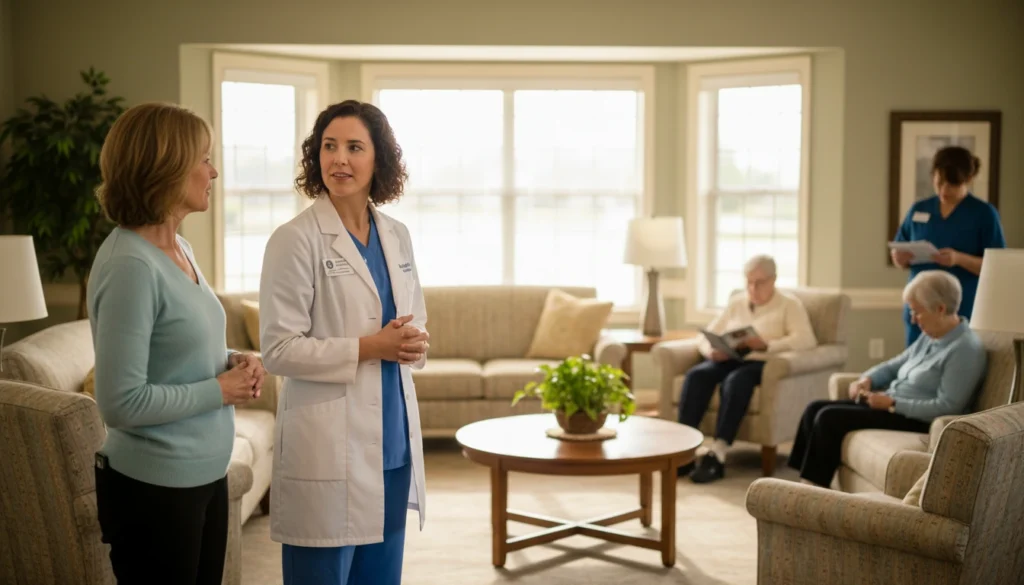
- Customize tours around behavioral and medical needs.
- Involve nursing staff early to answer clinical questions.
- Send post-tour recap + customized care plan proposal within 1 hour.
- Follow up within 24–48 hours with answers to remaining concerns.
Strong B2B Referral Relationships
- Build regional networks with neurologists, geriatricians, and hospitals.
- Host quarterly clinical education sessions.
- Create easy referral portals with direct clinical handoff.
Pipeline Visibility & KPIs
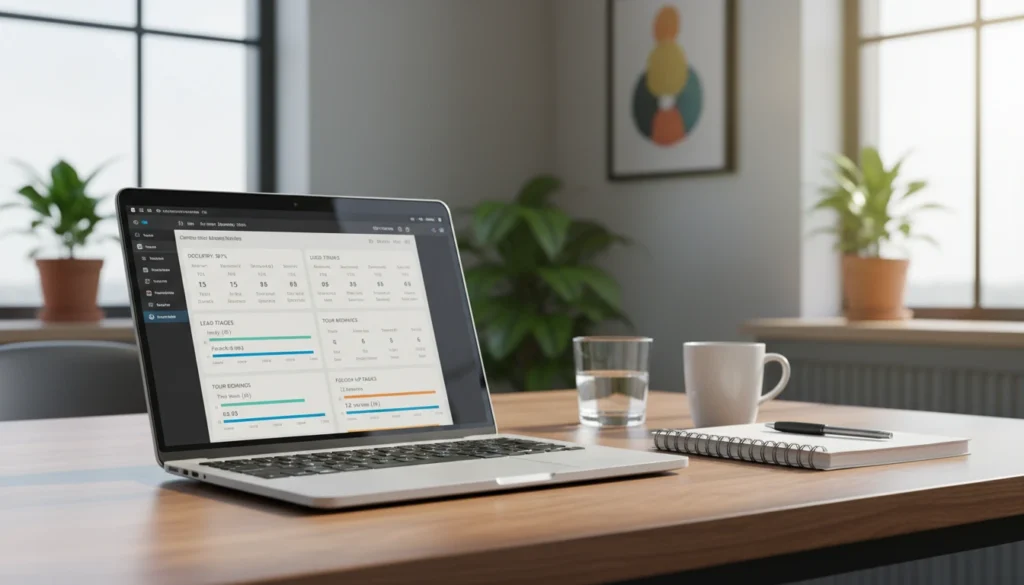
- Use CRM with memory care-specific stages and weekly reporting.
- Track lead velocity, drop-off points, and move-in forecast.
These memory care occupancy solutions often deliver 15–25% occupancy lift in 6–9 months.
For pipeline fundamentals that apply directly to memory care, read our guide on building a predictable assisted living sales pipeline.
Quick Diagnostic: Where Is Your Memory Care Occupancy Leaking?
Use this checklist (based on real operator audits):
| Area | Your Current State | Red Flag (Fix First) | Potential Impact |
| Lead Response Time | >1 hour average | Yes | 300%+ tour lift |
| Referral Network Strength | <5 active high-quality sources | Yes | High |
| Inquiry-to-Tour Conversion | <20% | Yes | High |
| Tour-to-Move-In Rate | <30% | Yes | Very High |
| Post-Tour Follow-Up Speed | >48 hours | Yes | High |
| Weekly KPI / Reporting Discipline | No regular tracking | Yes | Medium-High |
If three or more are red, focus there first for the fastest census improvement.
Integrating Solutions Into a Full Memory Care Census System
The strongest results come from an integrated framework:
- Demand Generation — Targeted B2B outreach + professional content → see assisted living lead generation strategies (adapt for memory care)
- Follow-Up Automation — Multi-channel clinical sequences → explore how follow-up automation impacts occupancy
- CRM & Pipeline Management — Memory care-specific stages → read choosing the right CRM
- Tour & Move-In Optimization — Clinical focus → check assisted living tour conversion playbook
- Overall Strategy — B2B-first approach → learn from assisted living marketing strategy
At Alchemical Marketing, we help memory care operators build these tailored census systems. In one recent engagement, a 45-unit facility went from 72% to 90% occupancy in eight months — adding 11 residents and ~$900,000 in annualized revenue. The team finally had a repeatable, data-driven process.
Learn more about our approach on the Alchemical Marketing homepage or explore our full range of services.
Ready to implement proven memory care occupancy solutions? Secure your free strategy session.
Common Mistakes in Memory Care Occupancy Growth
From experience:
- Treating it like assisted living — ignores longer cycles and clinical needs
- Weak referral relationships — missing the highest-converting source
- Generic nurturing — families need specialized dementia education
- No weekly KPIs — drop-offs go unnoticed
Start with response time, clinical personalization, and referral building.
Your Next Step Toward Stronger Memory Care Occupancy
With senior living occupancy holding strong around 88–89% into 2026 and memory care demand continuing to grow, operators who execute focused memory care occupancy solutions will fill units faster and more predictably.
If your memory care community is underperforming, don’t wait another month. Schedule a complimentary occupancy strategy call today — we’ll review your current state and give you clear, prioritized next steps.
Here’s to more move-ins and stronger occupancy in 2026.
Frequently Asked Questions
What makes memory care occupancy solutions different from assisted living?
Longer decision cycles (60–120 days), higher need for clinical trust and education, and reliance on professional referrals. Focus on reassurance, specialized knowledge, and persistence.
What’s the fastest way to improve memory care occupancy?
Ultra-fast response time (<30 minutes) + clinical follow-up. It can boost tour bookings 300%+ and sets the foundation for everything else.
How long does it take to see meaningful memory care census recovery?
Most operators see initial gains (5–10% lift) in 60–120 days. Full stabilization (15–20%+) typically takes 6–9 months with consistent execution.
Should memory care operators rely on consumer ads?
Minimal. B2B demand generation (referrals, targeted professional outreach) delivers higher-quality leads that convert faster.
How much revenue can memory care occupancy growth add?
At average monthly rates of $7,500–$9,500 per resident, filling 6–10 more units can add $540,000–$1.1M+ in annualized revenue for a mid-sized community.