
TABLE OF CONTENTS
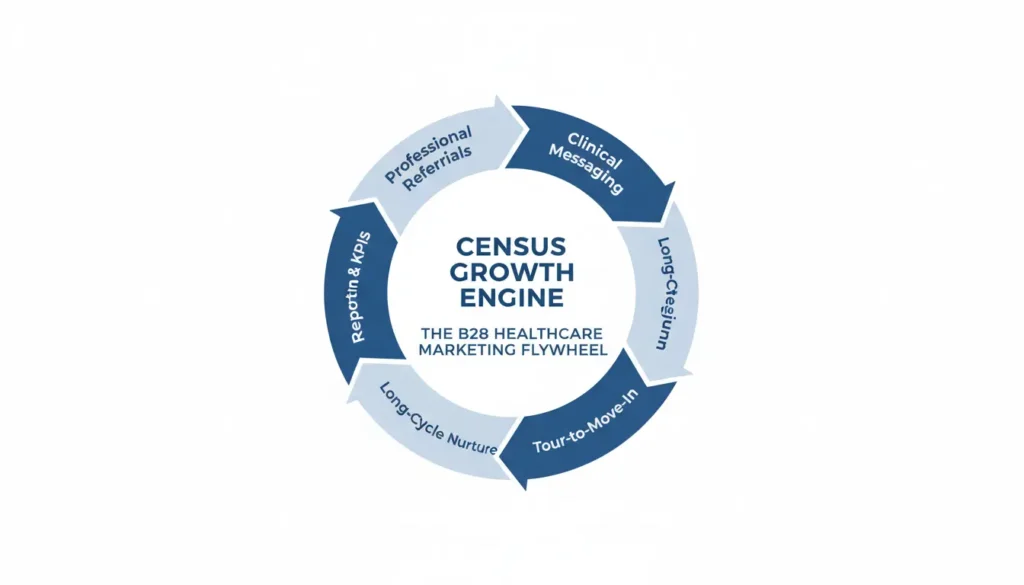
Memory care marketing requires patience and precision. Unlike assisted living, families rarely decide quickly. They need clinical education, emotional reassurance, and repeated professional validation. I once consulted for a 7-community memory care portfolio averaging 73% occupancy in 2025. Each site was running its own ads and follow-ups. Results were inconsistent; some locations hit 88%, others stayed below 70%. We created a unified memory care marketing strategy with centralized clinical messaging, regional referral development, automated long-cycle nurturing, and portfolio-wide KPIs. Nine months later, the entire portfolio averaged 89%, with the lowest site reaching 85%. Annualized revenue increased by approximately $5.1 million. The corporate team finally had control without losing local responsiveness.
As of January 20, 2026, memory care fundamentals remain very favorable. NIC MAP Vision Q4 2025 preliminary indicators show senior housing occupancy stable around 88–89%, with memory care communities continuing to gain occupied units despite limited new construction (annual supply growth <1% in most major markets). Demand from the aging Baby Boomer cohort with cognitive impairment is still rising steadily.
This guide is written for Owners/Operators, Regional Directors, Executive Directors, and corporate marketing leads responsible for memory care operator marketing across one or multiple sites. It outlines a practical, census-first MC growth plan that delivers measurable move-ins and occupancy stabilization.
If your memory care marketing feels fragmented or isn’t consistently filling units, schedule a free strategy review call. We’ll audit your current approach and identify the highest-leverage changes.
The Census-First Mindset for Memory Care Marketing
Traditional memory care marketing often chases consumer volume. That produces many early-stage inquiries that rarely convert. A census marketing MC approach flips the priority:
- Quality over quantity
- Professional referrals over broad consumer ads
- Long-cycle nurturing over quick closes
- Move-in velocity and occupancy lift over vanity metrics (clicks, impressions)
In 2026, with occupancy already high and new supply still constrained, operators who treat marketing as a census engine, not a lead engine, achieve the strongest ROI.
Core Principles of an Effective MC Growth Plan
A successful memory care growth plan rests on five interlocking principles.
- B2B-First Targeting Primary audience = referral sources (neurologists, geriatricians, hospital discharge planners) and secondary influencers (social workers, case managers).
- Clinical Authority as the Core Message: Every piece of communication must reinforce clinical expertise, safety protocols, staff training, and dementia-specific outcomes.
- Long-Cycle Nurturing: Expect 60–120-day decision windows. Plan 10–15 educational touches over 90+ days.
- Portfolio Visibility & Standardization: One regional dashboard showing occupancy trends, move-in velocity, cost per move-in, and top/bottom performers.
- Measurable Census ROI: Success = move-ins per quarter + occupancy percentage, not leads or clicks.
This framework consistently produces 12–25% portfolio occupancy lift within 9–15 months.
Choosing the Right Channels for Memory Care Operator Marketing
Not all channels are equal in memory care.
| Channel | Lead Quality | Typical Cost per Qualified Lead | Conversion Potential | Best Use Case in Memory Care |
| Professional Referrals | Very High | $2,000–$4,500 per move-in | 35–55% | Primary source (neurologists, hospitals) |
| Targeted B2B Google Ads | High | $60–$140 | 25–45% | “memory care referral network” keywords |
| Clinical Education Webinars | High | Low (organic + paid promotion) | 20–40% | Build trust with discharge planners |
| Content Syndication (guides) | Medium-High | $20–$80 | 18–35% | Long-term nurturing & SEO |
| Broad Consumer Ads (Facebook) | Low | $15–$50 | 8–18% | Minimal, only very targeted |
B2B senior living channels (referrals + targeted search + professional education) produce 60–80% of the highest-converting move-ins in most portfolios I’ve advised.
For scalable lead acquisition tactics, see our related guide on assisted living lead generation strategies; the B2B principles translate directly to memory care.
Developing Clinical-First Messaging That Converts
Every touchpoint must answer the same unspoken question: “Is this community safe and capable of caring for my loved one with dementia?”
Core messaging pillars that work in 2026:
- Clinical Expertise, “100% of care staff trained in Teepa Snow Positive Approach.”
- Safety & Security , “WanderGuard® system with 24/7 monitoring and instant alerts”
- Personalization: “Individualized behavior management plans updated weekly.”
- Family Support , “Dedicated family liaison + monthly caregiver support groups”
- Outcomes: “Average length of stay 32 months, 18 months above industry average”.
Use these pillars consistently across all channels and collateral.
For pipeline fundamentals that support better conversion from marketing leads, read building a Predictable Assisted Living Sales Pipeline.
Automating the Long Nurturing Cycle
Memory care requires persistent, educational follow-up. Manual nurturing collapses under volume.
Recommended automation structure:
- Minute 0–30, Instant SMS + email confirmation (clinical tone)
- Hour 1, Value-first email (“Understanding the 7 Stages of Dementia”)
- Day 1, Personalized video from Clinical Director
- Day 3, Downloadable safety & care guide
- Day 7 , SMS + calendar link for consultation
- Day 14–30, Bi-weekly clinical content drops
- Day 45–90, Monthly check-in + success story
This sequence often doubles response rates and increases memory care tours to move-ins.
For practical automation examples, see how follow-up automation impacts occupancy and assisted living marketing automation drives move-ins.

Tour & Close Optimization for Memory Care
Tours must feel like consultations, not property showings.
High-conversion elements:
- Clinical staff present from the beginning
- Focus on behavioral & safety protocols first
- Show real care plans and daily schedules
- Immediate post-tour recap + customized proposal (within 60 minutes)
- 24–48 hour structured follow-up call
Operators who implement this see tour-to-move-in rates rise 15–25 points.
For proven tour frameworks, review the assisted living tour conversion playbook and adapt the clinical emphasis for memory care.
Portfolio-Wide Visibility & Reporting
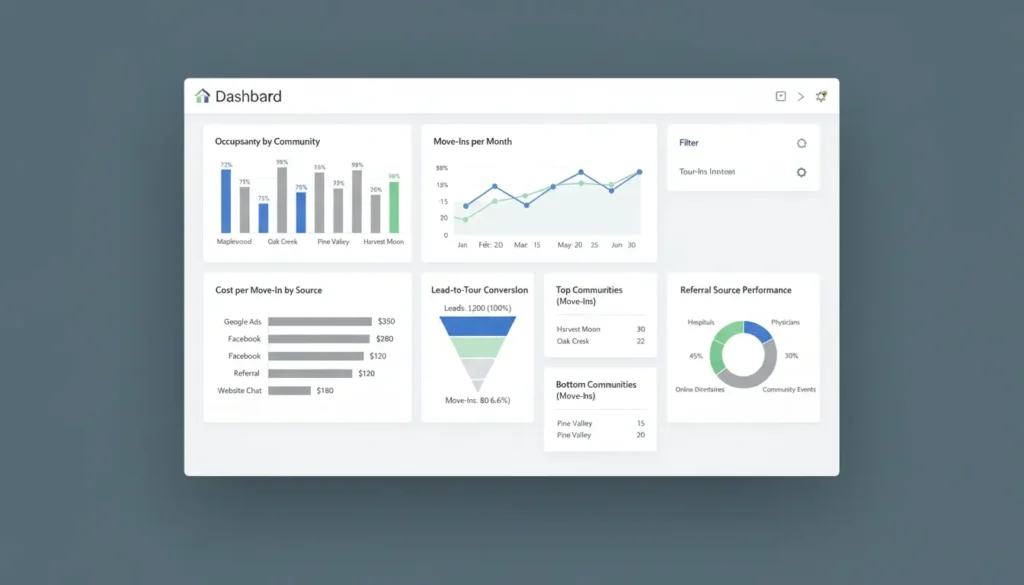
Multi-site memory care marketing requires one source of truth.
Essential weekly dashboard KPIs:
- Portfolio average occupancy
- Move-ins per community (current vs target)
- Cost per move-in by source
- Lead-to-tour conversion by site
- Top/bottom performing communities
- Referral source performance
This visibility allows rapid replication of winning tactics and correction of underperformers.
Common Mistakes in Memory Care Marketing Strategy
From real operator engagements:
- Relying too heavily on consumer channels, low intent
- Generic messaging misses clinical reassurance needs
- No centralized dashboard, hides weak sites
- Short nurturing cycles, families need 60–120 days
- Inconsistent follow-up kills momentum
Start with professional referrals and clinical messaging, measure weekly.
Your Next Step Toward Consistent Memory Care Growth
With memory care demand continuing to grow and occupancy stable around 88–89% in early 2026, operators who execute a deliberate memory care marketing strategy focused on census growth will widen the gap between top and bottom performers.
If your memory care marketing isn’t reliably filling units, don’t wait another quarter. Schedule a complimentary strategy review today, and we’ll assess your current plan and deliver clear, prioritized recommendations.
Here’s to a stronger census, more predictable move-ins, and healthier portfolios in 2026.
Frequently Asked Questions
How different should memory care marketing be from assisted living marketing?
Significantly. Memory care needs longer nurturing (60–120 days), clinical-first messaging, and heavy reliance on professional referrals rather than broad consumer ads.
What’s the most important channel for memory care operator marketing?
Professional referrals (neurologists, hospitals, discharge planners) typically make up 40–60% of the highest-converting move-ins when relationships are actively managed.
How long does it take to see results from a census-focused MC growth plan?
Initial improvements (5–10% portfolio lift) often appear in 4–6 months. Full stabilization and 15–25% gains are common within 9–15 months.
Should memory care marketing use consumer ads at all?
Very selectively and only highly targeted. B2B channels (referrals + professional education) deliver far better ROI and lead quality.
How do I measure ROI on memory care marketing?
Track cost per move-in, move-ins per quarter, and occupancy percentage lift , not clicks or impressions. True success shows in the census and revenue.