
TABLE OF CONTENTS
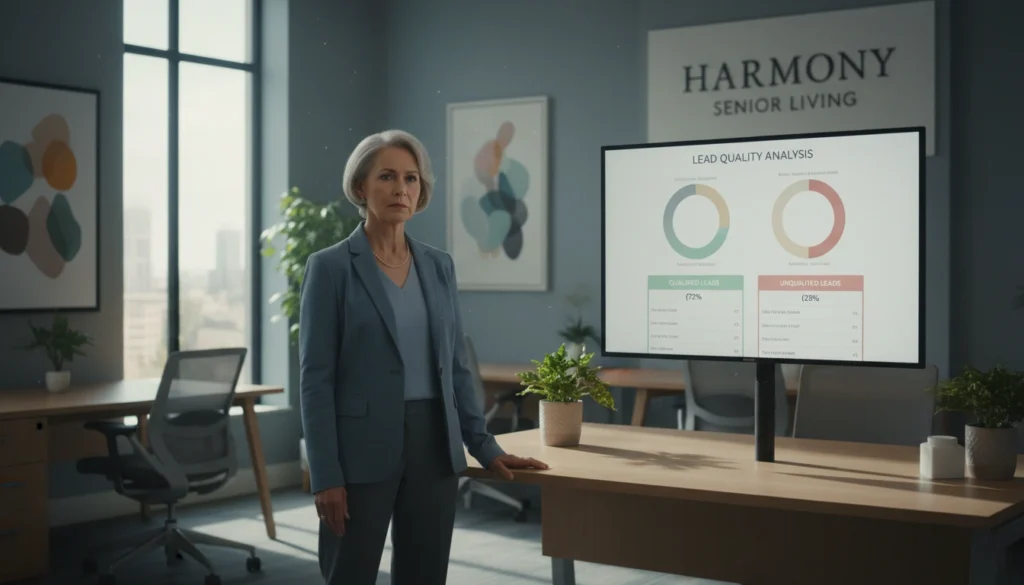
Lead volume is easy. Lead quality is hard — and in memory care it makes all the difference. I once consulted for a 45-unit memory care portfolio in 2025 that was drowning in inquiries from broad consumer campaigns. They had 120+ leads per month but only 4–6 move-ins per quarter. Conversion was stuck at 9%. After auditing sources we discovered 75% of inquiries were early-stage families with no urgency or clinical fit. We shifted to professional referrals, targeted B2B search, clinical education content, and lead scoring MC. Within seven months qualified leads dropped to 55–70 per month but move-ins rose to 11–14 consistently. Occupancy climbed from 73% to 89%. The Regional Director later told me the turning point was realizing more leads were actually hurting — not helping — the census.
As of January 20, 2026, memory care demand continues to outpace new supply in most primary markets. NIC MAP Vision Q4 2025 preliminary indicators show senior housing occupancy stable around 88–89%, with memory care communities gaining occupied units steadily. In this environment, operators who prioritize qualified memory care inquiries over raw volume achieve dramatically better sales efficiency, conversion, and ROI.
This guide is written specifically for Executive Directors, Owners/Operators, Regional Directors and Sales Directors who want memory care lead quality that produces real move-ins — not just more names in the CRM.
If your memory care leads feel low-quality or your team wastes time on unqualified inquiries, schedule a free lead quality audit call — we’ll analyze your current sources and show you the fastest path to higher-conversion leads.
Why Lead Quality Matters More in Memory Care
Memory care sales cycles average 60–120 days — far longer than assisted living. Families need extensive education and clinical reassurance. Low-quality leads (early-stage, price shoppers, mismatched acuity) rarely survive the cycle.
Typical benchmarks (2025–2026 data):
- Lead-to-tour conversion: 15–30%
- Tour-to-move-in rate: 20–35%
- Overall inquiry-to-move-in: 8–15%
When lead quality is poor, these numbers drop further. When qualified memory care inquiries dominate, operators routinely hit 35–45% lead-to-tour and 40–50% tour-to-move-in.

The Cost of Low-Quality Memory Care Leads
Low-quality leads create hidden costs:
- Staff burnout — chasing unqualified prospects
- Higher cost per move-in — wasted nurturing time
- Pipeline bloat — CRM fills with dead leads
- Delayed census recovery — resources diverted from high-intent prospects
- Referral reputation damage — when families feel mismatched
In 2026, with labor costs still elevated, operators cannot afford to waste time on leads that won’t convert.
Top Sources for Qualified Memory Care Inquiries
Focus on B2B sources that produce higher-intent leads:
- Professional Referrals — Neurologists, geriatricians, hospital discharge planners (highest quality, 35–55% conversion)
- Targeted B2B Search — Keywords like “memory care referral network,” “dementia placement support”
- Clinical Education Content — Webinars, guides for professionals (“2026 Dementia Care Referral Guide”)
- Referral Events — Quarterly lunches or CEU sessions for discharge planners
These sources often generate 60–80% of the highest-converting move-ins in portfolios I’ve advised.
For lead source tactics that scale, see memory care lead generation qualified move-ins.

Lead Scoring MC: Separating High-Intent from Noise
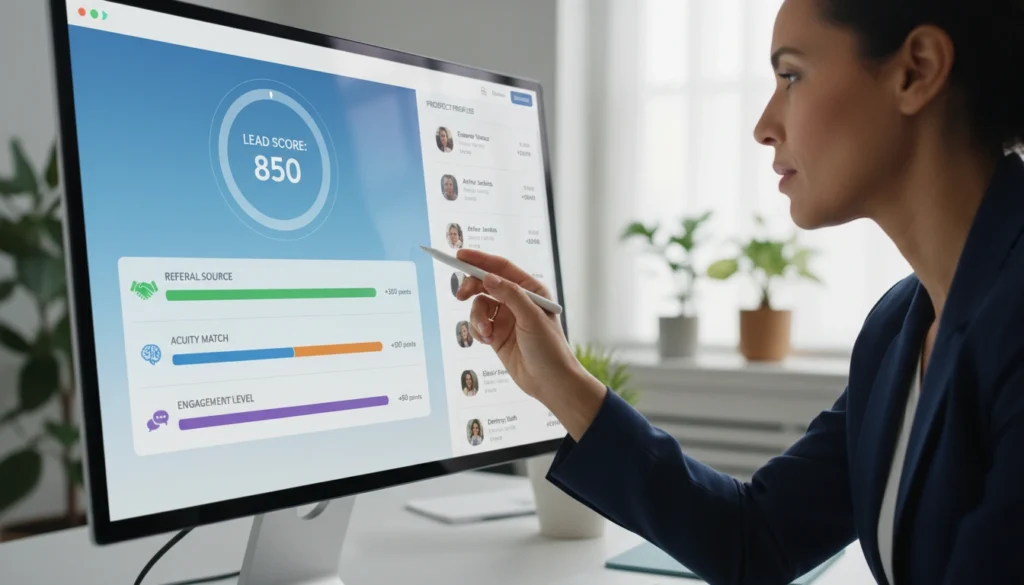
Lead scoring MC is the fastest way to improve sales efficiency.
Simple memory care scoring model operators use:
| Criterion | Points | Why It Matters |
| Referred by neurologist/geriatrician | +40 | Highest intent & trust |
| Referred by hospital discharge planner | +30 | Urgent need, clinical fit |
| Current acuity level known & matches capability | +25 | Avoids mismatch |
| Decision-maker is adult child + medical POA | +20 | Faster decisions |
| Inquiry mentions specific behaviors (wandering, sundowning) | +15 | Indicates readiness |
| Responds to first nurture touch within 48 hours | +15 | Engagement signal |
| Multiple family members engaged | +10 | Decision momentum |
Score >70 = high priority. Score <40 = nurture drip only.
This simple scoring can cut time wasted on low-intent leads by 50–70%.
For pipeline discipline that supports scoring, see crm systems built for memory care sales teams.
Nurturing & Qualification Workflows for Memory Care Leads
High-quality leads still need long-cycle nurturing — but the content must be clinical and trust-building.
Recommended workflow:
- Minute 0–30 — Instant SMS + email confirmation from Clinical Director
- Hour 1 — Value email: “Understanding Dementia Care Levels & Safety”
- Day 1 — Personalized video message (2–3 minutes)
- Day 3 — Downloadable guide: “Behavioral Support in Memory Care”
- Day 7 — SMS + calendar link for consultation
- Day 14 — Testimonial from similar referral source
- Day 30–90 — Monthly clinical updates + gentle check-ins
Operators who implement this see response rates double and conversion rise significantly.
Measuring Lead Quality & Marketing ROI in Memory Care
For nurturing automation examples, see how automation improves memory care census.
Track these KPIs weekly to prove lead quality improvements:
| KPI | Target (Strong Performer) | Red Flag | Why Track It |
| % of Leads from Professional Referrals | >60% | <40% | Quality indicator |
| Qualified Lead Rate (post-qualification) | 50–70% | <40% | Nurture efficiency |
| Cost per Qualified Lead | <$150–$250 | >$350 | Marketing ROI |
| Lead-to-Tour Conversion | 35–50% | <25% | Pipeline health |
| Cost per Move-In | <$3,000–$4,000 | >$5,500 | True ROI |
| Move-Ins from Top 3 Referral Sources | >65% | <45% | Source dependency |
These metrics shift focus from “leads generated” to “qualified move-ins produced.”

Common Mistakes That Kill Memory Care Lead Quality
From real operator audits:
- Relying on broad consumer ads — low intent
- Generic nurture content — misses clinical needs
- No lead scoring — treats all leads equally
- Poor referral management — misses highest-quality source
- Focusing on quantity KPIs — hides quality problems
Fix one mistake at a time — measure weekly — repeat.
Integrating Lead Quality Into the Full Memory Care Census System
High lead quality feeds every part of the system:
- Pipeline Management — Clear stages → read building a predictable assisted living sales pipeline
- Follow-Up Automation — Clinical sequences → explore how automation improves memory care census
- Tour & Move-In — Better prospects → check improving memory care tour-to-move-in conversion
- Overall Strategy — Census-first → learn from memory care marketing strategy census growth
At Alchemical Marketing we help memory care operators build integrated systems that prioritize lead quality. One 50-unit facility went from 9% inquiry-to-move-in to 22% after shifting to qualified sources — adding 14 residents and ~$1.3 million in revenue.
See how we approach memory care lead quality on the Alchemical Marketing homepage or explore our full range of services.
Ready to stop wasting time on low-quality leads? Secure your free lead quality strategy session.
Your Next Step for Higher-Quality Memory Care Leads
With memory care demand continuing to grow and occupancy stable around 88–89% in early 2026, operators who master memory care lead quality will fill units faster with less wasted effort.
If your memory care leads are low-intent or your team spends too much time on unqualified prospects, schedule a complimentary lead quality review today — we’ll analyze your current sources and deliver clear next steps.
Here’s to more qualified inquiries, better conversions, and stronger occupancy in 2026.
Frequently Asked Questions
What percentage of memory care leads should come from professional referrals?
60–80% for high-performing operators. Referrals from neurologists, geriatricians, and hospitals produce the highest conversion rates.
How do you know if memory care leads are high-quality?
They come from professional sources, mention specific clinical needs, respond to first nurture touch within 48 hours, and have decision-maker + medical POA engaged early.
What’s the biggest mistake operators make with memory care lead quality?
Relying on broad consumer ads instead of professional referrals and clinical education — results in high volume but very low conversion.
How much can better lead quality improve ROI?
Operators often see cost per move-in drop 30–50% and overall conversion rise 2–3× when shifting from volume to quality focus.
Can one lead scoring MC model work for all memory care communities?
Yes — but customize weights slightly for urban vs rural markets and referral mix. Start simple (referral source + clinical mention + response time) and refine.