
Local SEO for Small Business: How to Get Found by More Local Customers
Local SEO for small business is about showing up when location affects who a customer chooses. If someone searches for a dentist, roofer, home care agency, cleaning company, attorney, restaurant, or another nearby service, Google has to decide which businesses are relevant to that search and which ones are close enough and established enough to deserve visibility.
That makes local SEO a specialized part of a broader small business SEO strategy. Traditional SEO helps your website rank for relevant searches. Local SEO adds geography, Google Maps, your Google Business Profile, reviews, local pages, business information, and local authority to the equation.
At Alchemical Marketing, we think about local SEO as a visibility system, not a collection of directory submissions. The goal is to make it easy for Google and potential customers to understand what you do, where you do it, and why your business deserves to be considered.
If you want professional help managing that system, our AI SEO services include local SEO, keyword research, on-page optimization, ongoing improvement, and performance reporting.
The point is not to rank for every search in your city. It is to become a strong candidate when the right customer nearby is looking for exactly what you sell.
TABLE OF CONTENTS
What Is Local SEO?
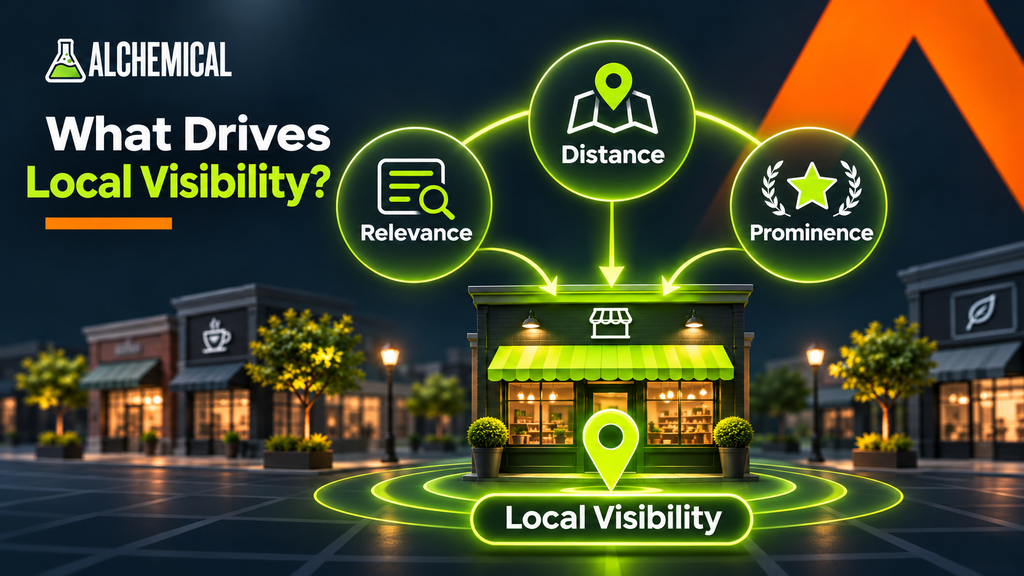
Local SEO is the process of improving a business’s visibility in search results where geography matters. That can include Google Maps, the local pack, Google Business Profile results, and traditional organic listings with local intent.
Google says local results are primarily based on relevance, distance, and prominence. In simple terms: how well the business matches the search, how close it is to the searcher or target area, and how established or well-known it appears.
That is why local SEO is not one tactic. Your Google Business Profile matters. Your website matters. Reviews matter. Local content, links, mentions, and accurate business information can matter. None of those pieces works in isolation.
What Is the Difference Between SEO and Local SEO?
SEO focuses broadly on helping pages become visible for relevant searches. Local SEO focuses on searches where the searcher’s location, the business’s location, or the service area changes the answer.
A national software company may care about ranking for “project management software.” A plumber in Denver cares about searches such as “emergency plumber near me,” “water heater repair Denver,” and even a search like “plumber” when Google determines the person is looking for a nearby business.
Local SEO also introduces surfaces and signals that do not play the same role in standard organic SEO, especially Google Business Profile, Maps visibility, proximity, local reviews, and service-area relevance.
Why Is Local SEO Important for Small Businesses?
Local SEO matters because many small businesses do not need visibility everywhere. They need to be visible to the right people inside the markets they can actually serve.
A local roofing company does not benefit from thousands of visits from homeowners 500 miles away. A physical therapy clinic does not need to rank nationally for every injury term. A service business wins when relevant people in its real market can find it and have enough information to choose it.
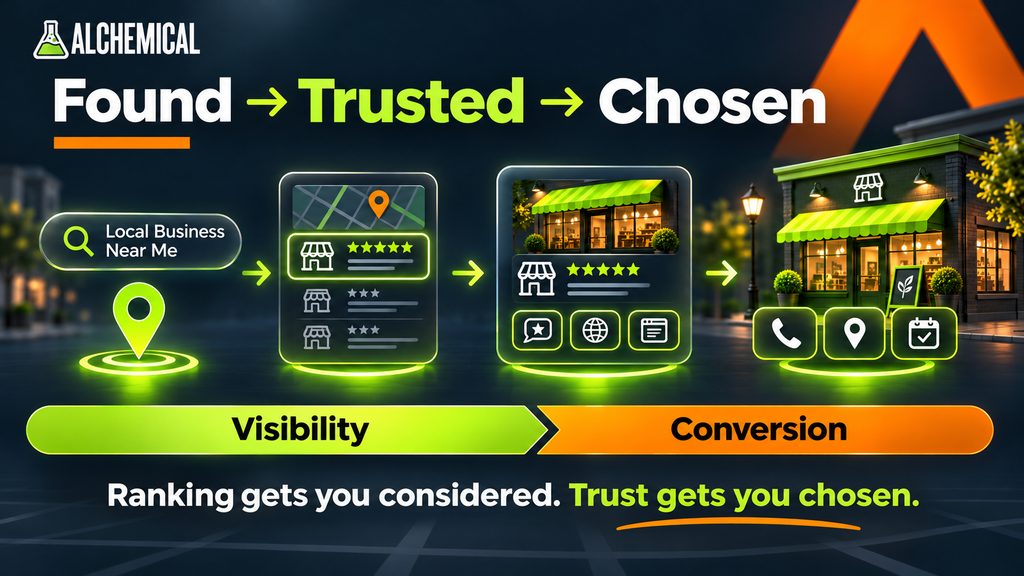
That creates two jobs for local SEO.
- Visibility: help the business appear for relevant searches in the markets it serves.
- Conversion: give the searcher enough trust, proof, and clarity to call, visit, book, or request information.
Google’s local ranking framework explains the visibility side. Relevance, distance, and prominence influence which businesses appear. Reviews and business information then become part of the customer’s decision once those businesses are visible.
This is why rankings alone are not enough. A business can rank well and still lose customers if the profile has poor reviews, confusing hours, weak photos, an outdated phone number, or a website that makes the next step difficult.
How Do You Do Local SEO for a Small Business?
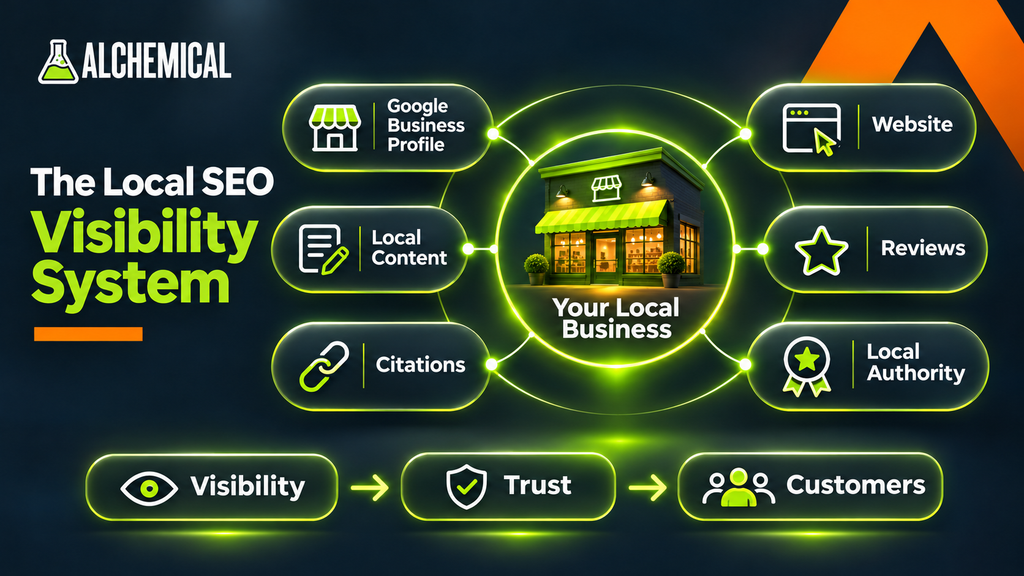
A practical local SEO strategy connects keyword research, Google Business Profile, website optimization, location content, citations, reviews, authority building, and measurement.
You do not need to do every possible local SEO tactic. You need to strengthen the parts of the system that are currently limiting visibility or trust.
Start With Local Keyword Research
Local keyword research starts with the services customers actually search for and the geographic context around those services.
Do not begin by generating hundreds of “service + city” combinations and assuming every phrase deserves its own page. Start by understanding the search intent.
For example:
- “roof repair” may have local intent even without a city name.
- “roof repair San Diego” contains explicit geographic intent.
- “how long does a roof last” is informational and may not need a local result at all.
- “emergency roofer near me” is strongly local and commercially urgent.
Ahrefs makes a useful distinction here: a keyword relating to a local business does not automatically have local intent. Check the actual search results. If Google consistently shows a local pack, Maps results, or nearby businesses, that is a strong sign the query has local intent.
Then map the searches to the page that best answers them. A business with several distinct services may need dedicated service pages. A business serving several meaningful markets may need location pages. The homepage should not be forced to rank for every service and every city.
Optimize Your Google Business Profile
For many local businesses, Google Business Profile is one of the most visible parts of local SEO.
The profile should reflect the business as it actually exists. Google’s guidelines emphasize using the real-world business name, accurate contact information, appropriate categories, correct hours, a legitimate address or service area, and one eligible profile for each real location.
The primary category deserves particular attention because it helps describe what the business actually is. A 2026 analysis reported by Search Engine Land looked at 1.8 million Google Business Profiles and found that more specific primary categories were associated with stronger local ranking performance. The study also found an association between profile completeness and better positions. That is useful evidence, but it is still correlation, not a published Google ranking formula.
In practice, keep the profile complete and useful:
- Choose the most accurate primary and secondary categories.
- Keep hours and holiday hours current.
- List the services you actually provide.
- Use accurate phone and website information.
- Add useful, real photos.
- Keep service areas and addresses compliant with Google’s rules.
- Monitor profile changes and customer questions.
- Respond to reviews.
Do not stuff keywords into the business name because a competitor is doing it. The profile should represent the real business, not the phrase you wish you ranked for.
Optimize Your Website for Local Search
Your Google Business Profile is not a replacement for your website. The website gives search engines and customers more context about your services, expertise, locations, proof, and next steps.
Google’s Search Essentials still apply. Important pages should be crawlable, useful, internally linked, and written using the language customers actually use.
For local SEO, that usually means making the geography clear where it genuinely helps the visitor. Service pages can explain where the service is available. Contact pages can show legitimate business details. Location pages can explain what is different or useful about that market.
The same page still has to work for a person after they click. Our small business website guide covers the broader conversion, trust, usability, and measurement side.
Local SEO gets the business considered. The website still has to give the customer a reason to choose it.
Build Useful Local Landing Pages
Location pages can help when the business genuinely serves different cities, neighborhoods, or markets. They become a problem when the strategy is simply to clone the same page 50 times and swap the city name.
Google’s spam policies specifically warn against doorway abuse, including substantially similar pages created for different cities or regions mainly to funnel visitors to the same destination.
A local landing page should exist because it is useful for that market.
Useful location-specific content can include:
- services actually offered in that area
- local office or service information
- relevant neighborhoods or communities
- real projects or customers from the market
- local reviews or testimonials where appropriate
- local photos
- market-specific FAQs
- pricing or service differences when they genuinely exist
- a clear local next step
If the only difference between two pages is the city name in the H1, you probably do not have two useful pages.
Build and Maintain Local Citations
A local citation is an online mention of a business that typically includes identifying information such as the business name, address, and phone number.
Citations can appear in major directories, industry sites, local associations, chambers of commerce, maps products, review platforms, and other places where customers might reasonably expect to find the business.
The goal is accuracy, not directory volume.
Keep important business information consistent enough that customers and search systems can understand they are looking at the same company. Correct old addresses, duplicate profiles, wrong phone numbers, and outdated business names where they matter.
Do not treat citation building like a race to submit to hundreds of obscure directories. A perfect directory count will not compensate for a weak Google Business Profile, poor reviews, thin service pages, or a website that does not deserve to rank.
Earn and Manage Reviews
Reviews influence both visibility and conversion.
Google says more reviews and positive ratings can help a business’s local ranking. Reviews also give customers evidence from people who have already used the company.
BrightLocal’s 2026 consumer research reinforces the customer side of that equation. Consumers increasingly pay attention to star ratings, recency, review responses, and information from more than one source before choosing a business.
A practical review system should make it easy for real customers to leave honest feedback and make review responses part of normal customer service.
Google allows businesses to ask customers for genuine reviews. It does not allow businesses to offer incentives in exchange for reviews.
Do not chase the perfect five-star profile. A steady stream of credible, recent feedback is much more useful than a burst of suspicious reviews that suddenly disappears.
How Do You Improve Local SEO Rankings?
Improving local SEO rankings starts by identifying which part of Google’s local framework is weak: relevance, distance, or prominence.
You cannot move your physical location closer to every searcher. Distance is partly outside your control. Relevance and prominence give you more room to work.
To improve relevance:
- Use accurate Google Business Profile categories.
- Describe services clearly on the website.
- Build useful service and location pages.
- Use local keywords where they naturally match the page.
- Keep business details complete and understandable.
To improve prominence and authority:
- Earn genuine reviews.
- Build links and mentions from relevant websites.
- Strengthen important service and location pages.
- Maintain accurate business information across important platforms.
- Publish useful content that demonstrates expertise in the market.
- Improve internal linking so important pages are easy to find.
Whitespark’s 2026 Local Search Ranking Factors survey is useful here as practitioner evidence. Its experts placed heavy importance on factors such as primary GBP category, proximity, reviews, dedicated service pages, geographic relevance, authoritative links, and internal linking. That is an expert survey, not a disclosure of Google’s algorithm, but it helps identify where experienced local SEOs are concentrating effort.
The bigger point is simple: fix the weak part of the system. More citations are not the answer to every ranking problem. More blog posts are not the answer to every ranking problem. Local SEO improves when the work matches the actual constraint.
How Does Local SEO Work for Multiple Locations?

A multi-location local SEO strategy should make each legitimate location easy for customers and search engines to understand without turning the website into a pile of duplicate pages.
Google allows eligible businesses to maintain separate Business Profiles for legitimate locations and provides specific guidance around naming, categories, addresses, and location consistency.
Each real market may also need its own website experience when the business has enough local value to justify it.
A strong location page can include:
- the location’s address or service area
- services available there
- local staff or leadership
- market-specific reviews
- local projects or proof
- local contact information
- unique FAQs
- directions or useful landmarks for physical locations
The mistake is cloning one page and changing “Dallas” to “Austin” to “Houston.” Search engines do not need more versions of the same paragraph. Customers do not either.
What Is Hyper-Local SEO?
Hyper-local SEO focuses on smaller geographic areas such as neighborhoods, ZIP codes, districts, landmarks, or tightly defined service zones.
It can make sense when customers choose businesses at a very local level or when a large city contains meaningfully different submarkets.
A real estate company might care about individual neighborhoods. A restaurant may care about visibility around a specific district. A home service company may discover that its best customers come from a limited group of high-value ZIP codes.
Google’s distance factor is the foundation. Semrush’s current local keyword research guidance also recommends examining neighborhood, ZIP/postcode, landmark, and micro-market language where customers actually use it.
Do not create a page for every ZIP code simply because the ZIP code exists. Hyper-local content should still solve a real search or customer need.
How Much Does Local SEO Cost for a Small Business?
There is no useful universal price for local SEO because the workload changes dramatically based on the market, website, competition, number of locations, and current condition of the business’s local presence.
Ahrefs surveyed 439 SEO providers and reported an average local SEO price of about $1,557 per month in its dataset, with agencies averaging about $1,819 and freelancers about $1,150. Those figures are useful context, not a required price or a promise of results.
Local SEO cost can change based on:
- number of locations
- competition in each market
- website condition
- Google Business Profile cleanup or optimization
- keyword and content needs
- location-page requirements
- citation cleanup
- review-management support
- link and authority work
- technical SEO needs
- reporting and analytics
A single-location business with a healthy website and clean profile is a different project from a 30-location company with duplicate listings, inconsistent information, weak location pages, and years of technical debt.
Compare scope before comparing price.
Should You Hire a Local SEO Company?
You should consider hiring a local SEO company when local search is important enough to the business that inconsistent execution or bad decisions have a meaningful cost.
Some businesses can manage local SEO internally. That is especially realistic when there is one location, the market is not highly competitive, the website is simple, and someone on the team has the time and knowledge to maintain the work.
Professional help becomes more useful when:
- the business has multiple locations
- rankings are weak in important markets
- Google Business Profile issues keep appearing
- the website needs stronger service or location architecture
- reviews and listings are unmanaged
- the business cannot connect SEO performance to leads
- competitors are investing heavily in local search
- no one internally has time to manage the work consistently
A good local SEO provider should be able to explain the strategy in plain English.
Ask what they will actually manage. Ask how they evaluate rankings across geography. Ask how they track calls, forms, bookings, or other meaningful outcomes. Ask who owns the Business Profile, website content, accounts, and reporting data.
Be cautious with anyone promising guaranteed first-place rankings. Google controls the results. An SEO provider controls the quality of the strategy and execution.
How Is AI Changing Local SEO?
AI is changing how people discover local businesses, but it has not made the fundamentals of local SEO irrelevant.
Google’s guidance for its generative search experiences says established SEO fundamentals still apply. Google also says businesses do not need special AI schema, a special AI version of the site, or an llms.txt file to appear in its generative search features.
What is changing is the shape of the question.
A traditional local search might be “dentist near me.” An AI-assisted search can be much more specific: “Which dentist near downtown Denver has evening hours, strong reviews, and experience with anxious patients?”
That creates more pressure for businesses to make important attributes clear across their website, Business Profile, reviews, and authoritative third-party mentions.
Semrush’s 2026 local keyword research guidance now explicitly considers discovery across Google, ChatGPT, Gemini, and Perplexity. Whitespark’s practitioner survey also added AI visibility factors such as authoritative mentions, reviews, service relevance, and geographic signals.
Those are useful clues, not a confirmed universal AI ranking formula.
The safest strategy is still to make the business easy to understand and easy to verify. Clear services, accurate locations, strong reviews, useful local pages, credible mentions, and accessible website content help both people and machines.
Local SEO Should Help the Right Customers Find You Nearby
Local SEO works best when you stop treating it like a checklist and start treating it like a local visibility system.
Google needs to understand what the business does, where it operates, and how credible it appears. Customers need to see enough proof to decide that the business is worth calling, visiting, or booking.
That is the job.
Rankings, profile views, impressions, and website traffic help diagnose performance. The business outcome is what happens next: calls, qualified leads, appointments, store visits, bookings, and customers.
If you want us to review your current local visibility, website, Google Business Profile, and biggest SEO opportunities, schedule a meeting with Alchemical Marketing.
Frequently Asked Questions
Is Local SEO Worth It for a Small Business?
Local SEO can be worth the investment when customers choose providers based partly on location and the business has enough local search demand to justify the work. It is especially relevant for service-area businesses, professional practices, retailers, restaurants, healthcare providers, home services, and other businesses that depend on customers in defined markets.
Does Local SEO Generate Leads for Small Businesses?
It can. Local SEO helps a business appear when potential customers are searching nearby, but visibility alone does not guarantee leads. The Business Profile, reviews, website, offer, contact experience, and follow-up process all affect whether that visibility turns into business.
What Local SEO Services Do Small Businesses Need?
The right mix depends on what is holding the business back. Common services include local keyword research, Google Business Profile optimization, on-page SEO, location and service pages, citation management, review strategy, technical SEO, local link building, reporting, and conversion tracking. A good plan should prioritize the gaps that matter instead of selling every tactic by default.
Is Local SEO Essential for Brick-and-Mortar Businesses?
For many brick-and-mortar businesses, local SEO is a major part of search visibility because customers often compare nearby options before visiting. Google Maps, Business Profile information, reviews, hours, directions, and local organic rankings can all influence that decision. The exact importance depends on how customers discover and choose the business.
Sources
- Google Business Profile Help: Tips to improve your local ranking on Google
- Google Business Profile Help: Guidelines for representing your business on Google
- Google Business Profile Help: Tips to get more reviews
- Google Search Central: Search Essentials
- Google Search Central: Spam policies for Google web search
- Google Search Central: LocalBusiness structured data
- Google Search Central: AI features and your website
- Semrush: Local SEO – What Is It & How to Do It
- Semrush: Local SEO Keyword Research
- Ahrefs: How to Do Local Keyword Research
- Ahrefs: SEO Pricing
- HubSpot: Everything You Need to Know About Local SEO
- Whitespark: 2026 Local Search Ranking Factors
- Search Engine Land: Google Business Profiles and local SEO success data
- BrightLocal: Local Consumer Review Survey 2026
- BrightLocal: Local Citations Guide